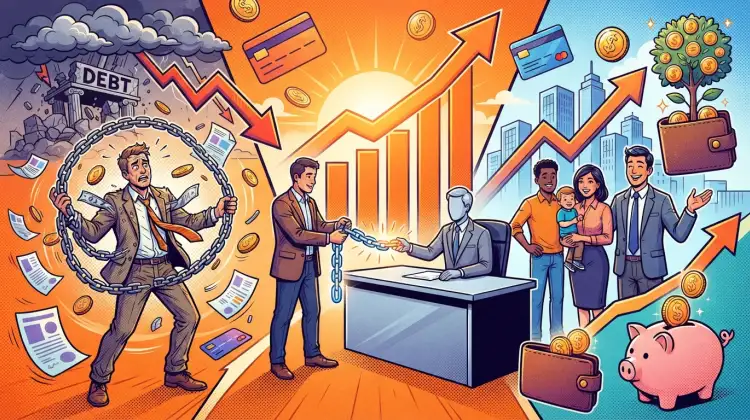
Debt consolidation combines multiple balances into a single new loan or credit line, ideally at a lower interest rate. It can simplify your finances and reduce what you pay in interest, but it is not a fix for overspending and can backfire if the underlying habits stay the same. This guide walks through the real trade-offs so you can decide whether consolidation fits your situation.
What Debt Consolidation Actually Involves
Most consolidation happens in one of three ways: a personal loan from a bank or online lender, a balance transfer credit card with a promotional 0% APR period, or a home equity loan or home equity line of credit (HELOC). A nonprofit credit counseling agency may also offer a debt management plan, which is a different product but is often grouped under the consolidation umbrella.
The mechanics are straightforward. You borrow enough to pay off your existing balances, then repay the new obligation in fixed or variable installments. According to the Federal Reserve, credit card APRs have frequently exceeded 20% in recent years, so replacing revolving balances with a lower-rate installment loan can meaningfully cut interest costs if you qualify. The catch is that qualification depends on your credit score, income, and debt-to-income ratio.
The Pros: Lower Rates, One Payment, and a Payoff Date
- Potential interest savings. If you move a 22% credit card balance to a 12% personal loan, more of each payment goes to principal. The Consumer Financial Protection Bureau notes that the size of the savings depends heavily on the rate you qualify for and the length of the new term.
- Simplified payments. One fixed monthly payment is easier to track than five due dates, which reduces the chance of a missed payment and a late fee.
- A defined payoff timeline. Installment loans amortize to zero on a set schedule, unlike revolving credit that can linger indefinitely when you pay only the minimum.
- Possible credit benefit over time. Paying down revolving balances can lower your credit utilization ratio, a major factor in FICO and VantageScore models, though the new loan inquiry may cause a small temporary dip.
- Fixed rates on many products. Personal loans typically carry fixed rates, so your payment will not change if market rates rise.
The Cons: Fees, Longer Terms, and the Risk of Rebuilding Debt
- Stretching out the term. A lower monthly payment can come from a longer repayment period, which means more total interest even at a lower rate. A $15,000 balance at 12% costs about $1,000 in interest over 24 months but roughly $3,000 over 60 months.
- Fees and closing costs. Balance transfer cards often charge a 3% to 5% transfer fee. Home equity products carry origination and closing costs, and a HELOC puts your home on the line.
- New debt on cleared cards. The most common failure mode is paying off cards, then running them up again. You then owe the loan and the cards, a worse position than before.
- Hard credit inquiry. Applying for a new loan triggers a hard pull that can shave a few points off your score temporarily.
- Secured debt risk. Using home equity to consolidate unsecured credit converts unsecured debt into debt backed by your house, which can lead to foreclosure if you fall behind.
- Not addressing the cause. If the debt came from a budget shortfall, consolidation changes the structure but not the cash flow problem.
How to Compare Your Options
Start by listing every balance, its APR, minimum payment, and remaining term. Then calculate the total interest you would pay under your current plan versus each consolidation option. A simple rule: consolidation makes sense when the new rate is meaningfully lower, the term is not dramatically longer, and you have a realistic plan to avoid new balances.
Check your credit reports for free at AnnualCreditReport.com before applying so you know which products you are likely to qualify for. Shop at least three lenders and compare the annual percentage rate, which includes fees, rather than the advertised interest rate alone. For balance transfer cards, divide the transfer fee by the number of months in the 0% window to see the effective monthly cost. If you are struggling with payments, a nonprofit credit counselor can review your budget and discuss a debt management plan, which often reduces rates through negotiated concessions rather than a new loan.
Who Benefits Most and Who Should Wait
Consolidation tends to work best for borrowers with steady income, a clear handle on spending, and balances that are large enough for interest savings to outweigh fees. It is a weaker fit for anyone who has already missed payments, since qualifying rates will be high, or who has not yet built a budget that prevents new borrowing. If your credit is damaged, spending a few months reducing utilization and catching up on payments can improve the offers you receive.
The Short Version
Debt consolidation is a tool, not a cure. It can cut interest, simplify payments, and give you a firm payoff date, but it can also stretch your debt over more years, add fees, and leave you worse off if you refill the cards. Run the numbers on total interest, not just the monthly payment, protect any home equity you use, and pair the loan with a spending plan that keeps new balances at zero. If the math is close or your habits are still in flux, a credit counselor or a stricter budget may serve you better than a new loan.