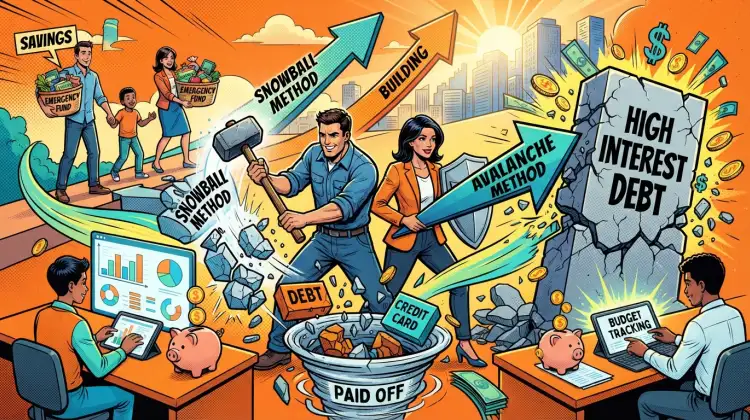
Your credit score is one of the most consequential numbers in your financial life. In the US, it influences whether you qualify for a mortgage, auto loan, credit card, or apartment lease, and it determines the interest rate you pay on borrowed money. A difference of 100 points can mean tens of thousands of dollars in extra interest over the life of a 30-year mortgage. The good news is that credit scores are not fixed. They are calculated from your credit reports, and you can influence almost every input.
This guide explains how scores work, which levers matter most, and the specific steps you can take to raise your score in the near term and over time.
Understand What Actually Goes Into Your Score
Most lenders use a FICO score, while many consumer-facing services show a VantageScore. Both are built from the same underlying data in your credit reports at the three national credit bureaus: Equifax, Experian, and TransUnion. The weighting differs slightly, but the FICO model is broadly structured like this:
- Payment history (35%) — whether you pay on time, and how late or delinquent you have been.
- Amounts owed (30%) — your credit utilization, or balances relative to limits.
- Length of credit history (15%) — how long your accounts have been open and active.
- Credit mix (10%) — a blend of revolving accounts like cards and installment loans like auto or student loans.
- New credit (10%) — recent applications and hard inquiries.
Because payment history and amounts owed together account for roughly two-thirds of a FICO score, those are where most improvement comes from.
Step 1: Pull Your Reports and Dispute Errors
You are entitled to free credit reports from each bureau at AnnualCreditReport.com, the only federally authorized site for free reports. Review all three reports line by line. Research by the Federal Trade Commission has repeatedly found that a meaningful share of consumers have errors on their reports, including accounts that are not theirs, payments reported late when they were on time, and balances reported incorrectly.
If you find an error, file a dispute directly with the bureau online or by mail. Under the Fair Credit Reporting Act, the bureau must investigate and respond, generally within 30 days. You can also dispute directly with the creditor. Removing a single collection account or a wrongly reported late payment can move a score significantly.
Step 2: Lower Your Credit Utilization
Utilization is the fastest-moving factor in your score. It is calculated both overall (total balances divided by total limits) and per card. As a rule of thumb, keeping utilization below 30% is good; below 10% is better. If you carry balances, paying them down before your statement closing date — not just the due date — can lower the balance that gets reported to the bureaus.
Practical moves include:
- Pay down the card with the highest utilization first, since per-card utilization matters.
- Ask your issuer for a credit limit increase (a soft or hard inquiry may apply — ask first).
- Avoid closing old cards you no longer use, as that reduces total available credit.
- Make multiple smaller payments across the month rather than one large payment.
Step 3: Build a Clean Payment Record
Payment history is the single largest factor, and one 30-day late payment can linger on your report for up to seven years. Set up autopay for at least the minimum on every account, and use calendar reminders for the rest. If you are struggling, contact your lender before you miss a payment — many offer hardship programs or will adjust a due date.
If you have thin or damaged credit, consider a secured credit card, which requires a cash deposit that serves as your limit. Used responsibly — small purchases paid in full each month — a secured card builds positive history. Similarly, a credit-builder loan from a community bank or credit union reports on-time payments to the bureaus.
Step 4: Manage New Credit and Inquiries Carefully
Each hard inquiry from a credit application can shave a few points, and multiple applications in a short window signal risk to lenders. Rate-shopping for a mortgage or auto loan is treated differently: inquiries within a focused window (typically 14 to 45 days, depending on the scoring model) are grouped as a single inquiry. Still, avoid opening several new cards at once, and space out applications by several months where possible.
Also be cautious with closing accounts. Closing your oldest card shortens your average account age and reduces total credit — both can hurt. If you want to stop using a card, keep it open with a small recurring charge paid automatically.
Step 5: Be Patient With Derogatory Marks
Late payments, collections, charge-offs, and bankruptcies stay on your report for seven years (Chapter 7 bankruptcies for ten). Their impact fades over time, and lenders weigh recent behavior most heavily. Rebuilding after a serious setback is a multi-year project, but consistent on-time payments and low utilization will steadily improve your standing. Avoid credit repair companies that promise to remove accurate negative information — no one can legally do that.
The Short Version
Improving your credit score comes down to a few disciplined habits: check your reports for errors and dispute them, keep balances low relative to your limits, pay every bill on time, and apply for new credit sparingly. Most score gains from utilization changes show up within one or two billing cycles, while payment history improvements compound over months and years. Start with your free reports, fix what is wrong, and let consistent behavior do the rest.