The 50/30/20 budget rule is a simple spending framework that divides your take-home pay into three buckets: 50% for needs, 30% for wants, and 20% for savings and debt repayment. It was popularized by Senator Elizabeth Warren and her daughter Amelia Warren Tyagi in their 2005 book All Your Worth: The Ultimate Lifetime Money Plan. The appeal is its simplicity: instead of tracking dozens of categories, you only need to monitor three. This guide explains how the rule works, what counts in each bucket, and how to adapt it to real life in the United States.
How the 50/30/20 Rule Works
The rule starts with your after-tax income—what actually lands in your checking account after federal income tax, Social Security and Medicare (FICA) taxes, and any state or local taxes. If you contribute to a traditional 401(k) or a health savings account through payroll, those pre-tax deductions also reduce the figure you budget from. Roth 401(k) contributions, by contrast, are made with after-tax dollars, so they come out of your 20% savings bucket.
Once you know your monthly take-home pay, you split it:
- 50% needs: rent or mortgage, utilities, groceries, insurance premiums, minimum debt payments, transportation, and childcare.
- 30% wants: dining out, streaming services, travel, hobbies, gym memberships, and non-essential shopping.
- 20% savings: emergency fund contributions, retirement savings beyond your employer match, extra debt payments above the minimum, and sinking funds for future goals.
For a household bringing home $5,000 a month, that means $2,500 for needs, $1,500 for wants, and $1,000 toward savings and debt.
What Counts as a Need Versus a Want
The line between needs and wants is where most people get stuck, and the rule is deliberately flexible. A need is something that keeps your household running and your obligations met: housing, food, basic utilities, health insurance, car payments required to get to work, and minimum payments on credit cards or student loans. A want is anything you could cut without threatening your basic stability.
Some items sit in a gray zone. A phone plan may be a need, but the premium unlimited data tier is arguably a want. A car may be a need, but a luxury upgrade is not. The practical approach is to assign each expense to the bucket that reflects its purpose, then be honest about the totals. If your needs consistently exceed 50%, the rule is telling you something useful: your fixed costs are too high relative to your income, which is a signal to look at housing, transportation, or insurance costs rather than to squeeze your savings.
Why the 20% Savings Target Matters
The 20% bucket does double duty: it builds your financial cushion and pays down expensive debt. Financial planners commonly recommend an emergency fund covering three to six months of essential expenses, held in a high-yield savings account or money market account at an FDIC-insured bank or NCUA-insured credit union. Beyond that, the 20% supports retirement contributions to an IRA or 401(k), where the IRS publishes annual contribution limits that change over time.
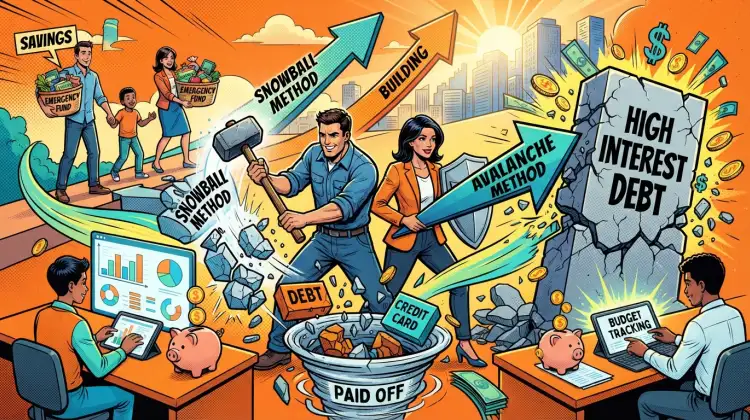
If you carry credit card balances, prioritizing extra payments in this bucket often delivers the best return, because credit card interest rates are typically far higher than any investment return you can count on. Once high-interest debt is cleared, redirect that money into savings and investing. The rule does not require you to split the 20% evenly—it simply caps your lifestyle spending at 80% of take-home pay.
How to Make the Rule Work in Real Life
The 50/30/20 rule is a starting point, not a law. In high-cost cities, housing alone can consume more than half of take-home pay, making a strict 50% needs cap unrealistic. In those cases, many people shift to a 60/20/20 or 70/20/10 split while keeping savings as the protected category. The key principle is to decide your savings target first and build spending around it, rather than saving whatever is left over.
A few practical steps help:
- Automate the 20%. Set up automatic transfers to savings and investment accounts on payday so the money never sits in checking.
- Review your three buckets monthly. A simple spreadsheet or budgeting app is enough; you do not need granular category tracking.
- Use irregular income carefully. If you are self-employed or paid commission, base your budget on your lowest typical month and treat extra income as savings.
- Revisit after major life changes. A raise, a move, a new child, or a paid-off loan all change the math.
One caveat: the rule works best for people with steady income and no overwhelming debt load. If you are facing collections, medical bills, or a housing crisis, a detailed budget and help from a nonprofit credit counselor may serve you better than a percentage framework.
The Short Version
The 50/30/20 rule gives you a clear, memorable way to balance today's spending with tomorrow's security: half of your take-home pay covers necessities, 30% covers discretionary spending, and 20% goes toward savings and debt. It is not a rigid formula, and adjusting the percentages is fine as long as you protect your savings target. Used thoughtfully, it turns budgeting from a chore into a simple check on whether your spending matches your priorities.