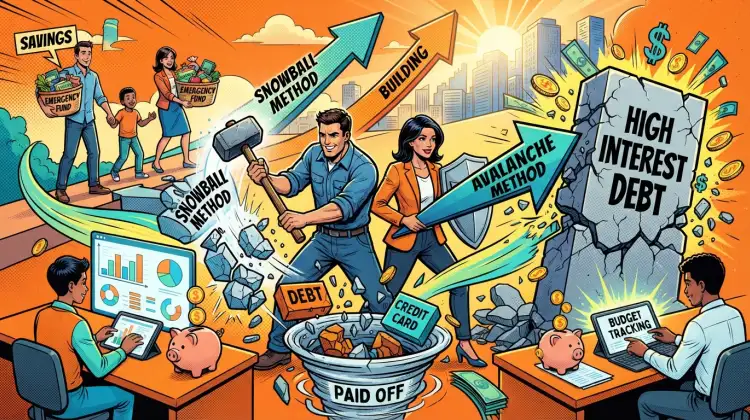
Tracking spending is the foundation of every other money decision you make. You cannot build a realistic budget, pay down debt, or grow savings without knowing where your dollars actually go. The good news is that tracking spending does not require spreadsheets, complicated apps, or hours of work each week. It requires a method you will actually stick to, a short list of categories, and a regular review habit. This guide walks through how to set up a spending tracking system, compare the main approaches, and turn the data into decisions.
Why tracking spending matters more than budgeting alone
A budget is a plan; tracking spending is the feedback loop that tells you whether the plan is working. Many households set a budget in January and abandon it by March because they never compare the plan to reality. Tracking closes that gap.
The data also surfaces leaks you would never guess. According to the Bureau of Labor Statistics' Consumer Expenditure Survey, the average American household spent about $77,280 in 2023, with housing, transportation, and food accounting for the largest shares. Within those totals, small recurring charges — subscription services, delivery fees, convenience purchases — often add up to hundreds of dollars a month without anyone noticing. Tracking makes those visible.
Finally, tracking spending reduces friction with a partner or spouse. When both people can see the same numbers, money conversations shift from blame to problem-solving.
Step 1: Choose a tracking method that fits your habits
There is no single best way to track spending. The right method is the one you will use consistently. Here are the four most common approaches and who each suits.
- Automatic app tracking. Apps like those from your bank or third-party budgeting tools link to your accounts and categorize transactions automatically. Best for people who mostly use cards and want minimal effort. Downsides: miscategorized transactions and privacy trade-offs from sharing bank credentials.
- Manual spreadsheet. You enter each expense yourself, either daily or weekly. Best for people who want full awareness and control, or who use cash frequently. Downsides: time and the temptation to skip entries.
- Receipt and envelope method. You keep receipts or divide cash into spending envelopes by category. Best for households that want hard limits and are prone to overspending. Downsides: impractical for online bills and automatic payments.
- Hybrid approach. Let an app or your bank capture card transactions, then manually review and correct categories weekly. This is the most common setup among people who track successfully long term.
Whichever you choose, connect as many accounts as possible — checking, credit cards, and payment apps — so the picture is complete. Missing one account is the most common reason a tracking system fails.
Step 2: Set a small number of categories
New trackers often create 30 categories and then quit. Keep it to 8 to 12 broad categories that match how you actually think about money. A workable starting set:
- Housing (rent or mortgage, insurance, utilities, maintenance)
- Groceries
- Dining out and coffee
- Transportation (car payment, gas, insurance, transit, rideshare)
- Health (insurance premiums, prescriptions, copays)
- Debt payments (minimums plus extra)
- Savings and investments
- Subscriptions and memberships
- Personal and household (clothing, home goods, pets)
- Fun and discretionary
Treat savings and debt payments as spending categories. They are outflows from your checking account, and tracking them keeps your totals honest while reinforcing that they are priorities, not leftovers.
Step 3: Build a weekly review routine
Daily tracking is not necessary. A 15-minute weekly review is enough for most people and is far more sustainable. Pick a fixed time — Sunday evening works well — and do the same four things:
- Open every account and confirm all transactions are captured.
- Fix any miscategorized items.
- Compare this week's total and category totals to your plan.
- Note one adjustment for next week.
Once a month, zoom out. Add up the month by category, compare it to your budget, and look for the two or three categories with the biggest gaps. Those are your highest-leverage places to cut. Trying to fix everything at once rarely works; fixing one category at a time usually does.
Step 4: Turn the numbers into decisions
Tracking only pays off when it changes behavior. Use these prompts during your monthly review:
- Fixed versus variable. Fixed costs like rent and insurance are hard to change quickly. Variable costs like dining, groceries, and fun are where fast savings live.
- Recurring charges. List every subscription and automatic charge. Cancel anything you have not used in 60 days. Reviewing subscriptions quarterly is one of the simplest ways to free up cash.
- Annualized thinking. A $12 monthly charge is $144 a year. Multiplying small charges by 12 makes decisions clearer.
- Pay yourself first. Automate a transfer to savings on payday, then track spending against what remains. This reverses the usual order and makes saving the default.
If you carry credit card balances, track the interest line separately. The Federal Reserve's consumer credit data shows revolving balances remain substantial for many households, and interest charges are a cost you can eliminate with a payoff plan. Seeing that number every month is a strong motivator.
Common mistakes to avoid
- Tracking only some accounts. Incomplete data leads to false confidence.
- Chasing perfect categories. Precision matters less than consistency; a slightly messy system you use beats a perfect one you abandon.
- Ignoring cash and peer payment apps. These are easy to forget and can hide a meaningful share of spending.
- Never reviewing. Tracking without a review is just data collection. The review is where the value is created.
What to Remember
Tracking spending works best as a simple, repeatable loop: capture every account, sort into a short list of categories, review weekly, and adjust monthly. Choose the method that matches your habits rather than the most sophisticated one. Keep savings and debt payments in the plan as first-class categories. And remember that the goal is not a flawless spreadsheet — it is knowing where your money goes so you can direct it toward what matters, whether that is paying off debt, building an emergency fund, or simply spending with less stress.