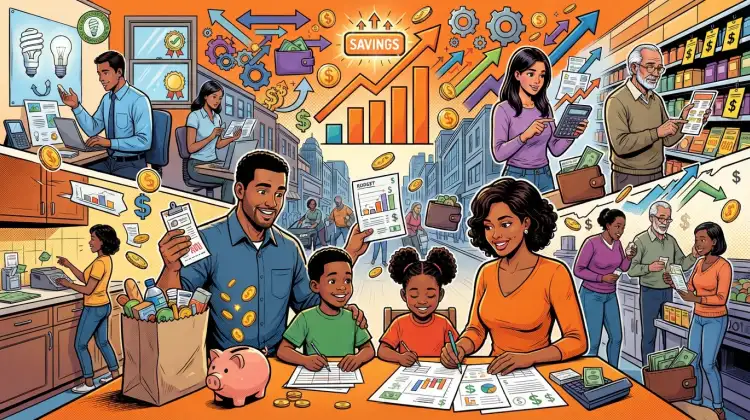
Saving money on everyday expenses rarely comes from one dramatic move. It comes from a series of small, repeatable decisions — the grocery list you actually follow, the subscription you cancel, the thermostat setting you adjust by two degrees. For most US households, the recurring costs of daily life (food, utilities, transportation, insurance, and subscriptions) make up the bulk of the monthly budget, which means they are also where the largest realistic savings live. This guide breaks down where the money goes and how to keep more of it without turning frugality into a full-time job.
Start With a Spending Snapshot
You cannot cut what you cannot see. Before changing any habits, pull the last two or three months of bank and credit card statements and sort spending into categories: groceries, dining out, utilities, phone and internet, insurance, gas or transit, subscriptions, and personal care. The Consumer Financial Protection Bureau recommends tracking income and expenses as the foundation of any budget, and the exercise usually surfaces at least one category that is higher than expected.
Look for the gap between what you think you spend and what the statements show. A household that assumes it spends $600 a month on groceries but actually spends $850 has found $250 of monthly savings potential before changing a single habit.
Cut Grocery and Food Costs Without Eating Worse
Food is typically the most flexible line item in a household budget. The US Department of Agriculture publishes monthly food plans showing that a moderate-cost plan for a family of four runs well above a thrifty plan, so the range of possible spending is wide. Practical levers include:
- Plan meals around what is on sale. Check store circulars and loyalty programs before writing a list, then build meals from discounted proteins and produce.
- Shop with a list and a full stomach. Unplanned purchases are the main driver of grocery overspend.
- Use store brands strategically. Private-label staples such as flour, oats, canned goods, and frozen vegetables are often identical in quality at a lower price.
- Limit food delivery and drive-thru spending. Delivery apps add fees and tips on top of menu prices; even cutting two orders a month can free up $40 to $80.
- Reduce food waste. Plan a "use it up" meal each week and freeze leftovers before they spoil. Wasted food is money already spent.
Lower Recurring Bills: Utilities, Phone, and Internet
Recurring bills are easy to ignore because they arrive automatically, which is exactly why they reward attention. A few approaches that work in most US markets:
- Ask for a better rate. Call your internet and mobile providers and ask about current promotional pricing or retention offers. Switching carriers or plans is often the single biggest recurring-bill saving available.
- Adjust the thermostat. The Department of Energy estimates that turning the thermostat back 7–10°F for eight hours a day can save as much as 10% a year on heating and cooling.
- Audit your electricity use. Use a programmable thermostat, seal drafts, and switch to LED bulbs. Many utilities also offer free energy audits or rebates.
- Review insurance annually. Bundling auto and home or renters insurance, raising deductibles slightly, and comparing quotes every year or two can reduce premiums meaningfully.
Trim Subscriptions and Discretionary Spending
Streaming services, gym memberships, cloud storage, and app subscriptions are small individually but add up quickly. Search your statements for recurring charges and ask three questions about each: Do I use it? Is there a cheaper tier? Could I share a family plan where the service allows it? Canceling two or three unused subscriptions commonly saves $30 to $60 a month.
For discretionary spending, try a 24-hour rule on non-essential purchases over a set threshold, such as $50. Delaying the decision removes impulse buys without requiring a strict no-spend rule. Cash-back and rewards credit cards can also help, but only if you pay the balance in full each month — otherwise interest wipes out the rewards.
Save on Transportation and Gas
Transportation is one of the largest household expenses after housing. Small changes compound:
- Combine errands into fewer trips and use apps to find lower-priced gas stations along your route.
- Keep tires properly inflated and remove excess weight from the car to improve fuel economy.
- Compare car insurance quotes at renewal rather than auto-renewing.
- For commuters, check whether transit passes, vanpools, or employer commuter benefits offer a cheaper alternative to daily driving and parking.
Build a Buffer So Savings Stick
Savings that get absorbed by an unexpected bill are not really savings. Direct a portion of what you cut into a dedicated savings account, ideally one with a competitive yield, and aim to build an emergency fund covering three to six months of essential expenses. Automating a transfer on payday, even a modest $25 or $50, makes saving the default rather than a decision you have to remember. The Federal Deposit Insurance Corporation insures deposits at member banks up to $250,000 per depositor, per bank, per ownership category, so a high-yield savings account at an insured institution is a safe place for this buffer.
Review your progress quarterly. Expenses drift upward as prices and habits change, so a short check-in every three months keeps the savings you have already captured from quietly eroding.
What to Remember
Saving money on everyday expenses is a process of visibility and small adjustments, not deprivation. Track your spending for a couple of months, then target the three or four categories with the most flexibility: groceries, recurring bills, subscriptions, and transportation. Automate the difference into savings, and revisit the plan quarterly. Most households can realistically free up several hundred dollars a month this way without a major lifestyle change.